
Pepper, Hot - Cayenne Long Slim


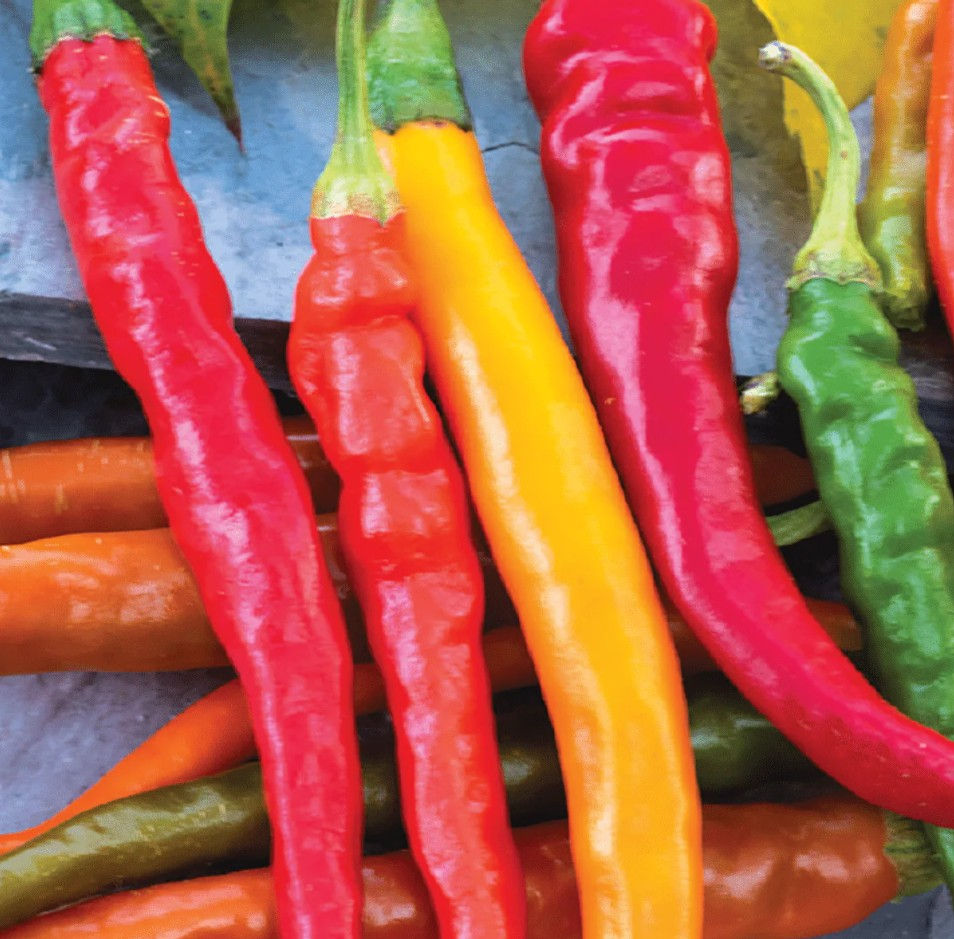
a classic heirloom hot pepper variety prized for its slender, wrinkled, elongated fruits that measure 4–6 inches long and about ½ inch wide. The thin-walled pods start dark green and ripen to a vibrant, glossy bright red. It delivers a clean, fiery heat (typically 30,000–50,000 Scoville Heat Units—hotter than jalapeños but not extreme) with a sharp, slightly smoky flavor ideal for drying into flakes or powder, making hot sauces, spicing soups, stews, or adding kick to fresh dishes.
Plant Care
Starting and Planting
Start seeds indoors 8–10 weeks before the last frost (mid-January to early February in Chico) in warm soil (70–85°F for reliable germination). Use seed-starting mix and provide strong light or grow lights. Transplant mid-March to early April after frost danger passes and nighttime temperatures stay above 50–55°F (soil ~60°F+). Plant 18–24 inches apart in rows 2–3 ft apart. Chico’s mild early springs give plants a great head start for heavy yields before peak summer heat.
Location and Soil
Choose a full-sun location (8–10+ hours daily)—Chico’s clear, intense summer sun promotes faster ripening, deeper red color, and hotter flavor. Avoid shady or low-lying areas. Use well-drained, fertile loamy soil; amend common Central Valley clay with compost or organic matter for improved drainage and nutrients. Aim for pH 6.0–7.5 (slightly acidic to neutral). Incorporate a balanced fertilizer or compost at planting—peppers are moderate feeders.
Support and Pruning
Plants are generally compact and self-supporting but benefit from light staking or small cages in windy Sacramento Valley conditions or when heavily laden with fruit. Pruning is minimal: remove lower leaves for better airflow and to reduce soil splash. Pinch the growing tip early if you want bushier plants, but avoid heavy pruning to keep production high.
Watering and Feeding
Water deeply and consistently—1–2 inches per week, increasing during July–August heat waves—to prevent blossom drop or fruit issues. Use drip irrigation or soaker hoses at the base to keep foliage dry and minimize evaporation in Chico’s dry air. Apply thick mulch (straw or wood chips) to retain moisture and suppress weeds. Fertilize every 3–4 weeks with a balanced organic fertilizer; switch to higher phosphorus/potassium once flowering and fruiting begin to support pod development and heat intensity.
Pest and Disease Management
Chico’s low humidity greatly reduces fungal diseases such as powdery mildew or blight, but good spacing and airflow help further. Watch for common pests like aphids, flea beetles, or hornworms—treat with neem oil, insecticidal soap, or hand-picking. Companion planting with basil or marigolds provides natural deterrence. Blossom end rot can appear with uneven watering or calcium deficiency—maintain steady moisture and add gypsum if soil tests show need. Overall, this variety is resilient in local hot, dry conditions.
Harvest and Flavor Tips
Harvest green pods when full-sized for milder heat, or wait until they turn bright red for maximum flavor and spiciness—pick regularly to encourage continuous production through October. The thin walls make them easy to dry (hang or dehydrate) for homemade cayenne powder or flakes. Use fresh in salsas, stir-fries, or hot sauces; the clean, sharp heat shines without overpowering other ingredients. In Chico’s heat, consistent watering prevents bitterness and helps develop the best fiery-sweet balance. Store fresh peppers in the fridge for 1–2 weeks or dry/freeze for long-term use.
Cayenne Long Slim is a reliable, productive choice for Chico gardens—perfect for adding homemade heat to your kitchen all season long!